- I6NET Solutions and Technologies


Blog
March 4, 2015
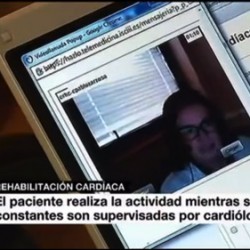
ISCIII (Instituto de Salud Carlos III) leads Telemedicine research and development projects in Spain providing most advanced mHealth solutions for many important Hospitals and Health industries. At I6NET, we are pleased to share with all our readers this amazing new service providing mobile health cardio monitoring to real patients and connecting them to doctors through video calls. That’s an ahead of its time mHeath and telemedicine service for cardiovascular diseases developed and sponsored by ISCIII for Hospital Ramón y Cajal (Madrid, Spain). Video: http://bcove.me/h28wxjqp More information: https://hazlo.telemedicina.isciii.es/
November 11, 2013
Enred@te impulsa la utilización de los servicios digitales para optimizar la atención a los mayores Madrid, 7 de Noviembre, 2013.– Fundación TECSOS, junto con Cruz Roja Española y Fundación Vodafone, ha desarrollado el proyecto “Enred@te”, que tiene como objetivo impulsar la utilización de los servicios digitales, concretamente las redes sociales, entre las personas mayores que viven solas. Con ello, se verá mejorada su comunicación y socialización a través de nuevas formas de interacción y de la creación de espacios virtuales de convivencia, tanto con su grupo de iguales como con sus familiares y/o cuidadores. El proyecto piloto Enred@te parte de la solución “SocialTV”, que fue probada y validada también durante una fase piloto, en 2011, por un conjunto de 100 usuarios distribuidos en 15 Comunidades Autónomas y 41 provincias. Esta- fase se llevó a cabo tanto desde los domicilios de […]
October 1, 2013
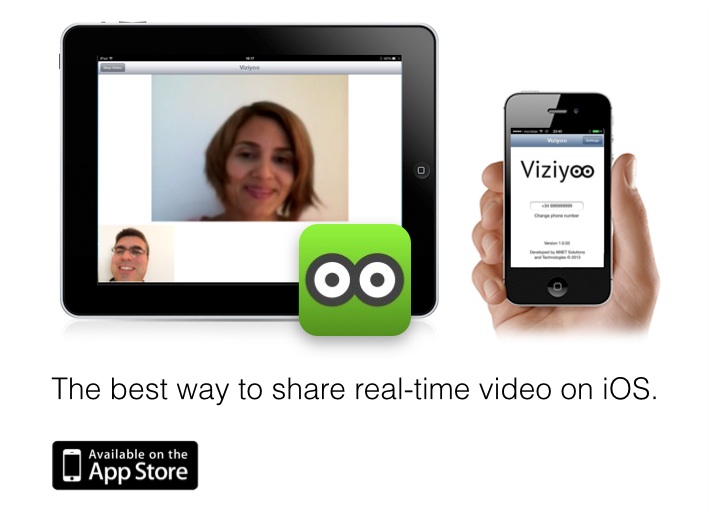
[framed_video column=”three-fourth”]http://youtu.be/5zID3xug4PI[/framed_video] Youtube link: http://youtu.be/5zID3xug4PI How it work At anytime during your phone call, both callers can launch Viziyoo to share video. Viziyoo can run over a WIFI or 3G (data) networks with a low IP bandwidth consumption. No account is required, we use only your phone number as your temporary ID. Make a phone call, and start talking with your friend Without hangup, go to the notification bar and select Add Video from Viziyoo Video will appear in few seconds and your call still running… You can stop or restart Video at any time or hangup your phone call Videocall features Flip Camera Start/Stop Video One more thing You can test yourself the application calling to our echo-test service: France: +33 485880136 Spain: N/A USA: N/A Enjoy video with Viziyoo!
June 5, 2013

[framed_video column=”two-thirds”]http://youtu.be/V3oUKPkoqsM[/framed_video] Link: http://youtu.be/V3oUKPkoqsM Subtitles: English French Spanish
January 16, 2013
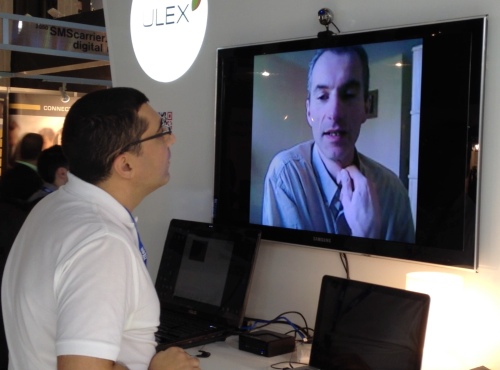
Photo: I6NET’s team using our Vxi*/RTMP systems for RTC with video HD, at MWC2012 Booth [dt_divider style=”gap”/] A clear definition of Real-time communications is important to understand what will be the newest evolution of Internet applications and services for businesses and individuals. All is moving around to more real-time, more video, better sound quality, better screen resolution, easier human-interfaces… RTC technology helps to share together most of our senses thru digital networks at light’s speed: Real-time communications (RTC) is any mode of telecommunications in which all users can exchange information instantly or with negligible latency. In this context, the term “real-time” is synonymous with “live.” RTC can take place in half-duplex or full-duplex modes. In half-duplex RTC, data can be transmitted in both directions on a single carrier or circuit but not at the same time. In full-duplex RTC, […]
September 27, 2012

Salesland is a leading field marketing and contact center company. Through its business lines: Sales Force Management, POS and Telemarketing offers tailored solutions to support the outsourcing of services that add value and profitability for companies of all sectors. Salesland drives a strong business growing beyond the crisis using advanced technologies and innovation. Now Saleland Call Center is one of the pioneers in the market to launch its own online videosales service. This advanced service is able to manage any kind of videocalls thru internet (dual videocall, single videocall or audio call only…). Salesland’s agents can provide realtime video call experience over the web to share realtime videos and discuss online with any customer or consumer. Salesland selects VXI* for video and online personal assistant services because it provides a flexible web videocall integration for all its contact center platforms and technicaly […]
June 25, 2012
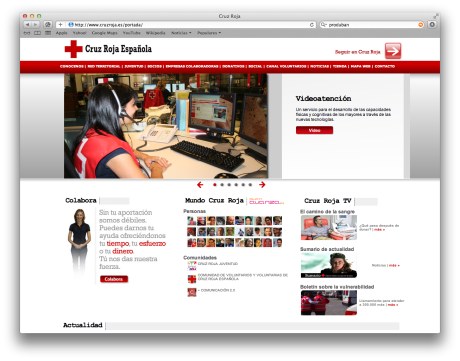
The Spanish Red Cross unveils the latest Video Contact Center for Teleassistance (called “Videoatención” in spanish) designed to help Seniors and develop domestic programs. This service represents a new evolution for contact centers rollouts over the years. Watch the online video at Red Cross TV [Spanish]: http://www.cruzroja.tv/video.php?MetaDataID=18551 Today, Seniors are one of the most important community of people (350.000) supported by Red Cross in Spain, so it was very important to develop high-performance and advanced remote services. We are very proud about this project where our Video IVR (IVVR) technology integrated with the Altitude Software uCI Contact Center Solution helps healthcare and solidarity. Beyond the crisis, video calls provide a new high-tech evolution on Teleassistance with important benefits face-to-face communication, real-time evaluation, video-interactive tests and of course a significant cost reduction for healthcare. Some pictures about this service in production: