- I6NET Solutions and Technologies


Blog
September 12, 2014

Picture: “Her” (film) – A man talking to a machine… Natural Language Understanding (NLU) can be a complementary in-side programing feature or a specific engine for an IVR. Currently, NLU is still an emerging technology but its nearest evolution is already starting to change the business of customer service. Within our global economy, every resource, every process, every system is pushed to the limits to be more and more automatized and efficient. Some years ago, thinking about driverless cars replacing drivers wasn’t considered a short-term reality, but today in 2014, there are many companies working on creating and making a reality the first comercial self-driving car. Evolution is coming to phone services, by adding a layer of NLU to your IVR, customers can hold amazing dialogs with your system, that you may have not imagine yet. Currently, most NLU engines are built to work with VoiceXML, […]
April 17, 2014
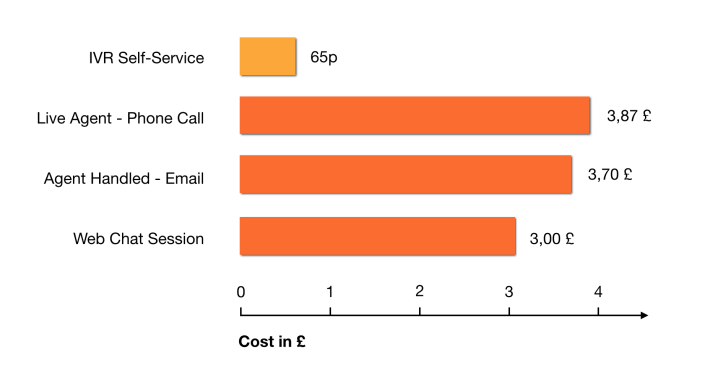
An new interesting report from ContactBabel has revealed that the average cost of a telephony IVR self-service session is 65p, compared to £3.87 for a live agent call, £3.70 for an agent-handled email and £3.00 for a web chat session. “While the future of customer contact will involve the extremes of highly personalised live service on the one hand, and the increasing use of automated systems on the other, we’re seeing that businesses and solution providers are looking to build strong links between automated and live service options to support seamless transitions as required,” said Steve Morrell, author of the report. “Self-service can truly be ‘win-win’ for customers as well as businesses. In the past, most self-service has been about cutting businesses’ costs, but the joined-up thinking now being shown and the increasing acceptance that it’s now an omnichannel world is […]
November 12, 2013
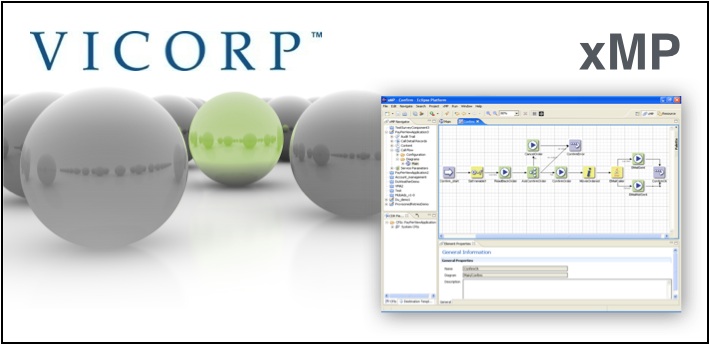
Slough, United Kingdom / Madrid, Spain – November 2013. Vicorp, the personalized self-service phone company, today announced that I6net, has selected xMP software as part of its IVR solutions in both hosted and premise solutions. I6net provides customers with the most advanced VoiceXML IVR plugin, Vxi*, for Asterisk. Asterisk is a free and open source platform framework for building communications applications on and is the most widely adopted platform of its type. Vicorp’s xMP ‘create once, deploy anywhere’ technology approach is important to I6net’s initiative because it enables self-service applications to be rapidly created and then deployed and centrally managed across a network of Vxi* media servers. This approach allows I6net customers to maintain a single set of self-service skills to rapidly create, deploy and manage several services whilst at the same time allowing them to choose a future proof […]
July 30, 2013

The most advanced VoiceXML browser for Asterisk ever made. We are pleased to unveil our latest Vxi* interpreter ready to work with all VoiceXML 2.1 tags. This new IVR / IVVR component includes a lot of amazing features, we had been working on it since a year! All users with previous maintained versions can upgrade today. You can also check our Changelog. Vxi* 8.0 is now suitable for production voice and video platforms running with all latest Asterisk 1.4, 1.6, 1.8 kernels! (all Asterisk’s packages are available for download too). Linux OS Distributions 32-bit / 64-bit versions: Debian 7.0 Wheezy Debian 6.0 Squeeze CentOs 6.0-6.4 CentOs 5.4-5.8 You can download these new binary packages from this website. Powered by I6NET Software New features added and modifications: add: Pass the speech properties to the ASR engine (configure sendProperties). add: URI checks […]
May 19, 2012

Spain, Madrid – May 19th, 2012. Each year, the Getafe’s Schools and the “Delegation de Education del Ayto de Getafe” conducts the school summer’s activities campaign for the next holidays. I6NET has developed the phone self-service dedicated to improve the Citizen Attention Service of the City of Getafe. This advanced IVR service is based on our PhoneScheduler application and provides a phone self-service where all families can call to schedule their meeting without spending less than 2 minutes without waiting any queue and using Voice Recording, DTMF menus, SMS Confirmation, Web Administration,… etc All our team is very proud and happy to provide this helpful service for Getafe’s families, one more time in 2012 with fully successful results. Service Brochure: [download id=”166″ format=”1″ autop=”false”] Customer Press Release: www.getafe.es-Escuelas-de-Verano-2012-Nota-de-Prensa Previous Posts: www.i6net.com-Escuelas-de-Verano-2009-BlogPost